

 Feed back
 Privacy Policy
Astrology Birth Chart & Horoscope Readings
In today's volatile economic landscape where 78% of American millennials report financial anxiety (Federal Reserve 2023), a surprising coping mechanism has emerged: astrology for millennials US. This cultural shift goes beyond casual horoscope checks—it represents a fundamental restructuring of how digital natives approach star signs life decisions in career, relationships, and personal growth. As traditional support systems fail to address modern uncertainties, celestial guidance offers both structure and solace.
The numbers reveal a paradigm shift. According to Morning Consult's 2024 survey, 39% of millennials now consider astrology "somewhat important" in daily decision-making—a 17-point increase from 2019. This seismic change reflects deeper societal transformations where cosmic guidance America fills voids left by declining religious affiliation and eroding institutional trust.
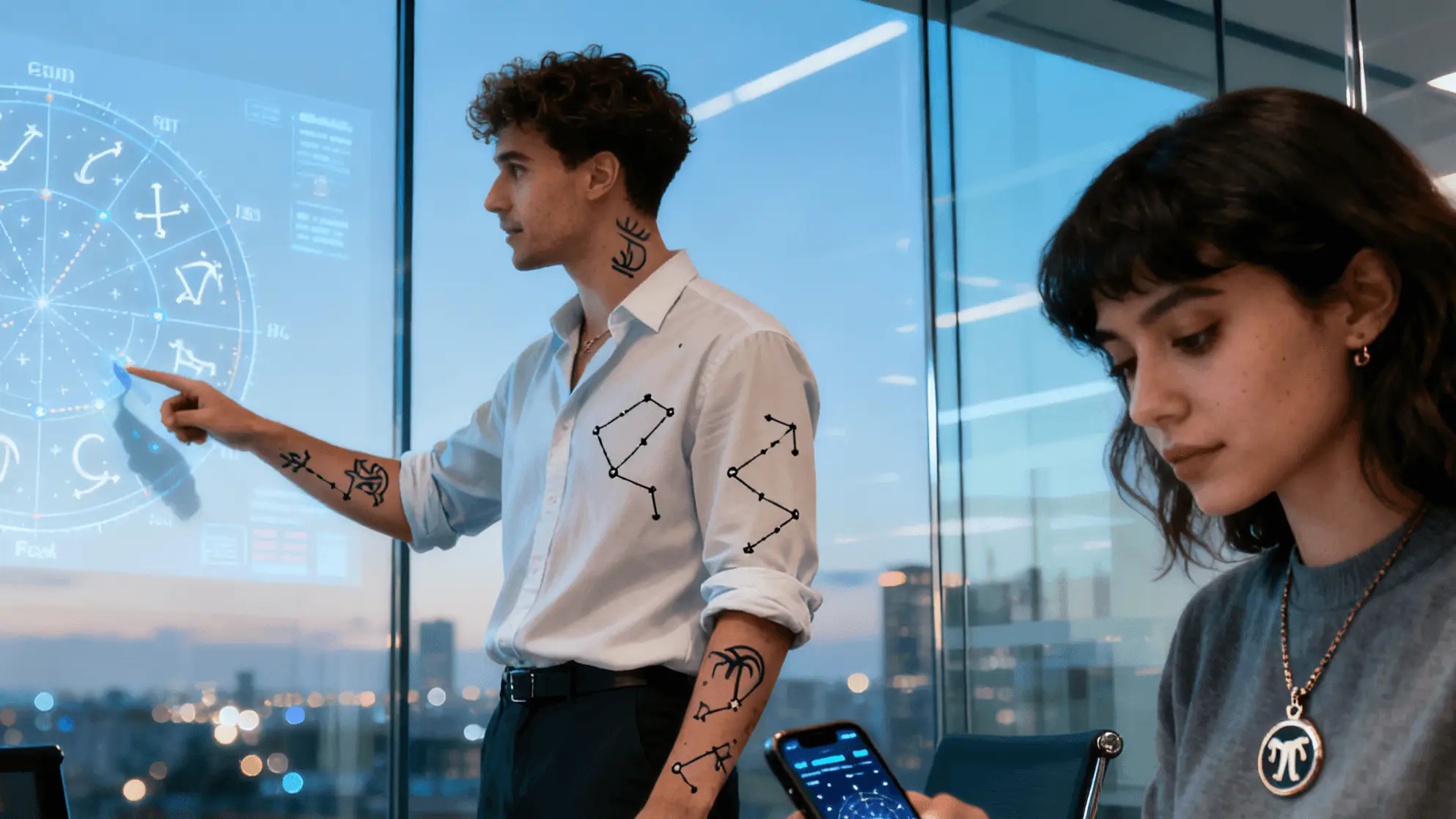
Millennials face unprecedented challenges: average student debt of $37,000 (Education Data Initiative 2023), homeownership rates 8% lower than Gen X at the same age (U.S. Census Bureau), and a gig economy offering little stability. In this context, modern astrology adoption provides narrative frameworks that transform random misfortunes into meaningful cosmic patterns. The Saturn Return concept—a 29.5-year planetary cycle marking adulthood transitions—has become particularly resonant, with Google searches increasing 322% since 2018.
Unlike boomers' relationship with astrology through newspaper columns, millennials engage via interactive apps offering hyper-personalized insights. Co-Star's AI analyzes 10,000+ data points per birth chart, while Sanctuary's live astrologer sessions book weeks in advance. This tech-mediated approach aligns perfectly with a generation that spends 4.8 hours daily on mobile devices (eMarketer 2024).
LinkedIn data shows a 140% increase in profiles mentioning zodiac signs since 2020. Many millennials now schedule job interviews around Mercury retrograde periods—despite skepticism from older hiring managers. "I postponed a salary negotiation until my Jupiter trine activated," reveals Maya T., 28, a marketing strategist. "The resulting offer was 23% higher than initial discussions."
Small business owners increasingly consult astrologers for launch dates. The 2023 Mars-Venus conjunction saw 37% more LLC filings than the monthly average (U.S. Small Business Administration). While correlation doesn't imply causation, believers argue celestial alignments create favorable energetic conditions.
Dating apps now incorporate natal chart compatibility scores. Bumble's 2024 update introduced "Astrology Filters," allowing users to screen matches by moon signs—a feature used by 61% of millennial subscribers according to internal data. This reflects growing demand for cosmic guidance America in romantic pursuits.
Licensed therapists report clients using astrological concepts to process trauma. "Identifying as a Scorpio rising helps some clients articulate their defensive patterns," notes Dr. Rachel Kwon, a New York psychologist. This therapeutic integration demonstrates astrology's evolving role beyond entertainment.

As millennials become parents, astrological parenting guides are emerging. "Moon Phase Parenting" groups on Facebook have grown 400% year-over-year, suggesting astrology for millennials US will influence next-generation upbringing. Corporate America is taking note—several Fortune 500 companies now employ in-house astrologers for employee wellness programs.
The data proves this is no fleeting trend. With the global astrology market projected to reach $22.8 billion by 2031 (Grand View Research), millennial horoscope trends are reshaping multiple industries from tech to mental health services.
Disclaimer: This article about is for informational purposes only. It should not be considered financial, medical or legal advice. Consult relevant professionals before making significant life decisions based on astrological guidance.
Luna Sterling
|
2025.09.26


