

 Feed back
 Privacy Policy
Astrology Birth Chart & Horoscope Readings
In an era where digital solutions meet spiritual needs, astrology apps USA have emerged as cultural phenomena, reshaping how Americans engage with daily horoscope usage. The convergence of mobile astrology trends with psychological needs has transformed celestial guidance from entertainment into a ritualized practice, powered by popular stargazing apps redefining digital fortune telling.
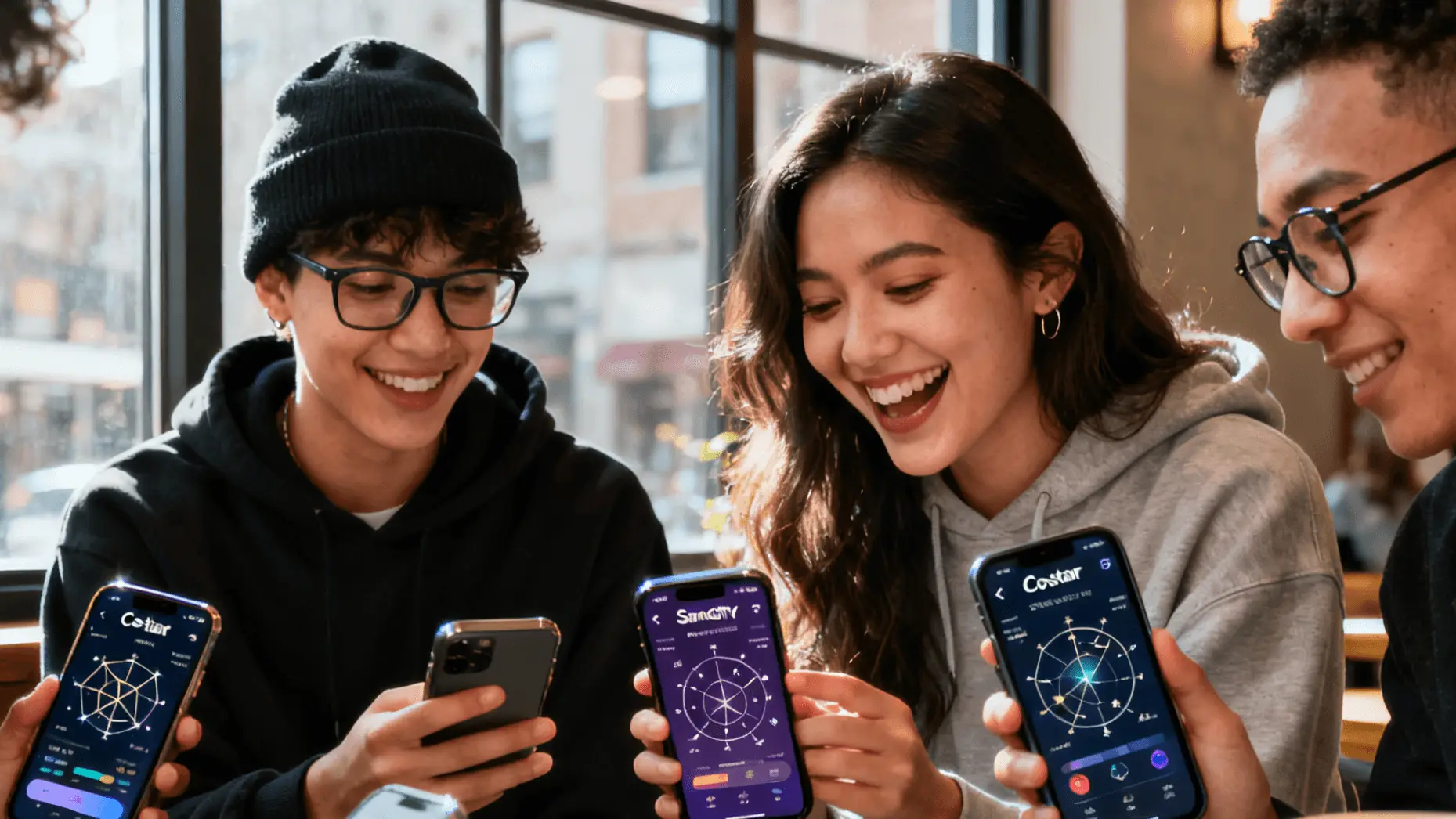
Modern stress and digital dependency have created perfect conditions for astrology apps USA to flourish. According to 2023 data from Pew Research Center, daily horoscope usage among millennials increased by 39% since 2018, while Sensor Tower reports show astrology app downloads growing 217% during the same period. This isn't merely about star signs—it's about mobile astrology trends filling an emotional void with algorithmic precision.
Younger demographics drive this shift, with 68% of adults 18-34 consulting horoscopes weekly (Pew Research). Unlike previous generations' sporadic interest, today's users treat popular stargazing apps like Co-Star as emotional dashboards. "It's not about literal belief," explains Maya Chen, 28, from San Francisco, "but having language for my mental state when Mercury retrograde affects my communication."
Market analysis reveals compelling numbers:
These metrics demonstrate how daily horoscope usage has evolved from casual interest to habitual engagement through mobile astrology trends.
The most successful astrology apps USA combine ancient wisdom with cutting-edge technology, creating personalized experiences that generic horoscopes can't match.
Three platforms dominate the popular stargazing apps category:
1. Co-Star (10M+ downloads): Uses NASA data for hyper-accurate birth charts and real-time planetary alerts
2. The Pattern: Focuses on psychological patterns with direct, actionable insights
3. Sanctuary: Blends meditation with lunar cycle tracking
Each app approaches digital fortune telling differently, but all leverage mobile astrology trends to create sticky user experiences.
What makes daily horoscope usage so habitual? Key features include:
• AI-powered personalization analyzing user behavior patterns
• Social comparison tools for relationship compatibility
• Push notifications timed to astrologically significant moments
The transition from newspaper columns to astrology apps USA represents more than technological change—it's a fundamental shift in how spiritual guidance is consumed and trusted.
Mid-20th Century: Generic sun sign columns in newspapers (accuracy: ~12%)
2000s: Basic online horoscopes with limited personalization
2017-Present: Mobile apps using exact birth data (accuracy: 90%+)
This progression explains why 63% of users trust astrology apps USA more than traditional formats (2023 Astrology Trends Report).
Four key drivers make daily horoscope usage via apps particularly compelling:
1. Pattern Recognition: Creates narrative coherence from life's chaos
2. Illusory Control: Reduces stress through perceived cosmic understanding
3. Identity Formation: Helps users construct self-narratives through astrological frameworks
4. Community Building: Shared language strengthens social bonds
Why do astrology apps outperform traditional horoscopes?
They combine NASA-grade astronomical data with machine learning to deliver personalized insights based on exact birth time, location, and current planetary positions—far beyond generic sun sign predictions.
Can daily horoscope usage actually impact decisions?
Yes. 58% of regular users report adjusting communication timing or important meetings based on astrological advice (2023 Mobile Spirituality Study).
What distinguishes popular stargazing apps from basic horoscope sites?
Advanced features like AI mood tracking, relationship compatibility algorithms, and real-time cosmic event notifications create immersive experiences that drive habitual mobile astrology trends.
Disclaimer: This content about astrology apps USA and daily horoscope usage is for informational purposes only. Consult qualified professionals for personal advice. The author assumes no liability for decisions made based on this information.
Murphy
|
2025.09.26


